
Growing green
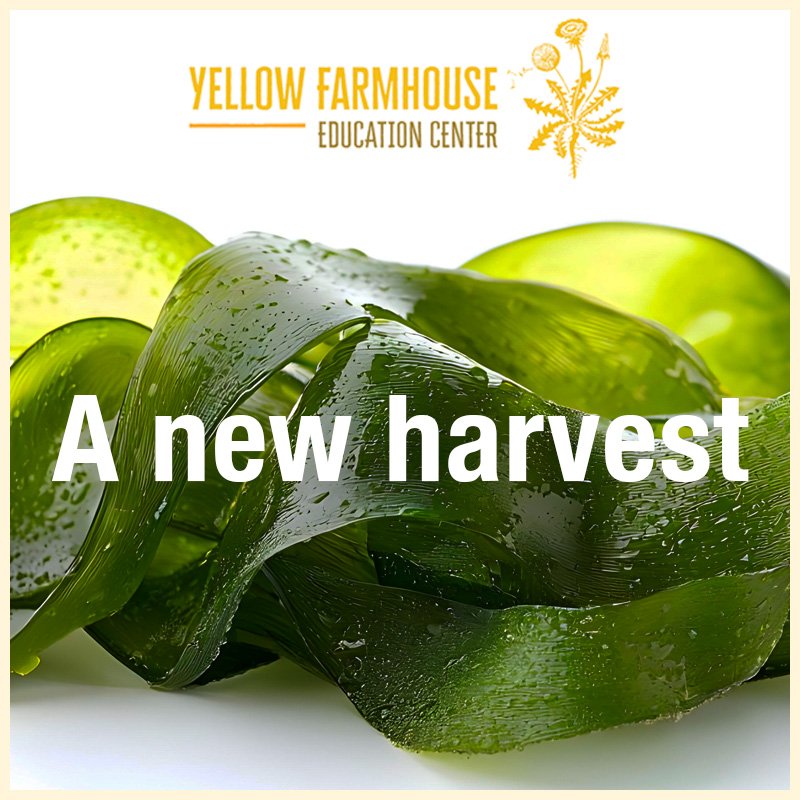
The earliest records of aquaculture are from China's Shang Dynasty, over 3,000 years ago. Today, aquaculture is a global industry, but also one that has been challenged by negative environmental impacts, the effects of climate change and warming seas, and until fairly recently our lack of an holistic, more detailed knowledge of how the ocean biosphere functions.
Over the past several decades, thanks to our growing understanding of ocean biosciences and physics and the impacts of climate change, a new form of sea harvesting is rapidly expanding world wide. Not only can it provide food, but it may also help ameliorate the negative effects of climate change.
Known as Regenerative Ocean Farming, the process is a sustainable, natural, 3-dimensional aquaculture method that grows a mix of seaweeds (like kelp) and shellfish (oysters, mussels, clams) in vertical underwater gardens, mimicking natural reefs to help restore marine ecosystems, improve water quality and sequester carbon, all with zero freshwater, fertilizer, or feed inputs, creating a positive impact on the ocean environment.
In Connecticut, we've been farming oysters as a business since the early 1800's. Our sugar kelp farming is a more recent and rapidly growing industry, formalized with state licensing around 2014-2015, building on early research at UConn and supported by the Bureau of Aquaculture. Farmers like Stonington Kelp Co. (founded 2017) cultivate sugar kelp as a versatile, environmentally friendly crop, helping diversify local fishing economies and serving local markets for food and potential uses like fertilizer. The growing industry has a deep bench of research, education, training and policy organizations here in Connecticut, ranging from CT Sea Grant at Avery Point to the NGO Greenwave Organization Corp. in New Haven.
Anoushka Concepcion, one of our UCONN Extension educators, explains the product and the industry, along with a chef and farmer involved in the process.
Stonington's Yellow Farmhouse has now joined that bench of talent by providing a solution to one basic and critical problem. In their words:
"At the Yellow Farmhouse, we strengthen our food system by connecting the dots between farmers, educators, students, and the land and sea that sustain us. Here’s one way we put that vision into action:
The Challenge
Through our educational work with a local kelp farmer, we gained firsthand insight into the realities of kelp harvesting. Kelp is highly perishable, and Connecticut’s kelp farmers need places to process and refrigerate their harvests quickly, but coastal land and infrastructure are scarce and expensive.
The Opportunity
The kelp harvest season runs from April through June, exactly when most land-based farms are not harvesting, creating a natural opportunity to share space and resources.
What We’re Building
By leveraging our role as a nonprofit, the connections we’ve built through our speaker network, and long-standing relationships with farmers and partners, the Yellow Farmhouse has secured state and federal support to create shared infrastructure. In partnership with GreenWave, a nonprofit supporting kelp farmers, and Stone Acres Farm, we are developing a commercial kitchen with processing equipment, including a kettle and a dehydrator, and a newly installed refrigerated shipping container.

The new refrigerated shipping containerß
Education & Impact
Land- and sea-based farmers use the shared infrastructure during complementary seasons, reducing costs through shared space and equipment. Students and teachers use the kitchen to preserve gleaned produce for hunger-relief efforts and for hands-on classroom learning.
Why It Matters
Partnership builds resilience. By investing in collaboration and shared infrastructure, we are modeling what’s possible — and building a stronger, more resilient food future for our region.”
Thank you for being part of this work! You can help by donating here:
Learn how this is a real business: Seaweed Source brings together kelp farmers, nurseries, processors, ingredient suppliers, and buyers to strengthen the seaweed supply chain in North America. Discover verified partners, explore processing capabilities, and connect with companies developing innovative and functional seaweed-based ingredients.